
Tiny Thoughts on Looking for the East from Where You Stand
"East Is Everywhere" by Ishita Chakraborty at Galerie Peter Kilchmann, Paris

In 1876, Henry Wickham boarded a ship in Santarém, Brazil, with seventy thousand rubber tree seeds smuggled in banana leaves bound for Kew Gardens. Within a generation, rubber trees descended from that single shipment covered British Malaya and Ceylon.
But what traveled with the seed was never only the seed; it was the plantation, the monocrop, the rows, the labor recruited and shipped across oceans. Brazil’s rubber economy was extracted and replanted, becoming the template for a system that would exceed rubber altogether; a system that persists today within our socioeconomic and political system, spawned by from the extraction of natural resources from the Global South to the Global North. And don’t let this be read as a critique but as a mere matter-of-fact.
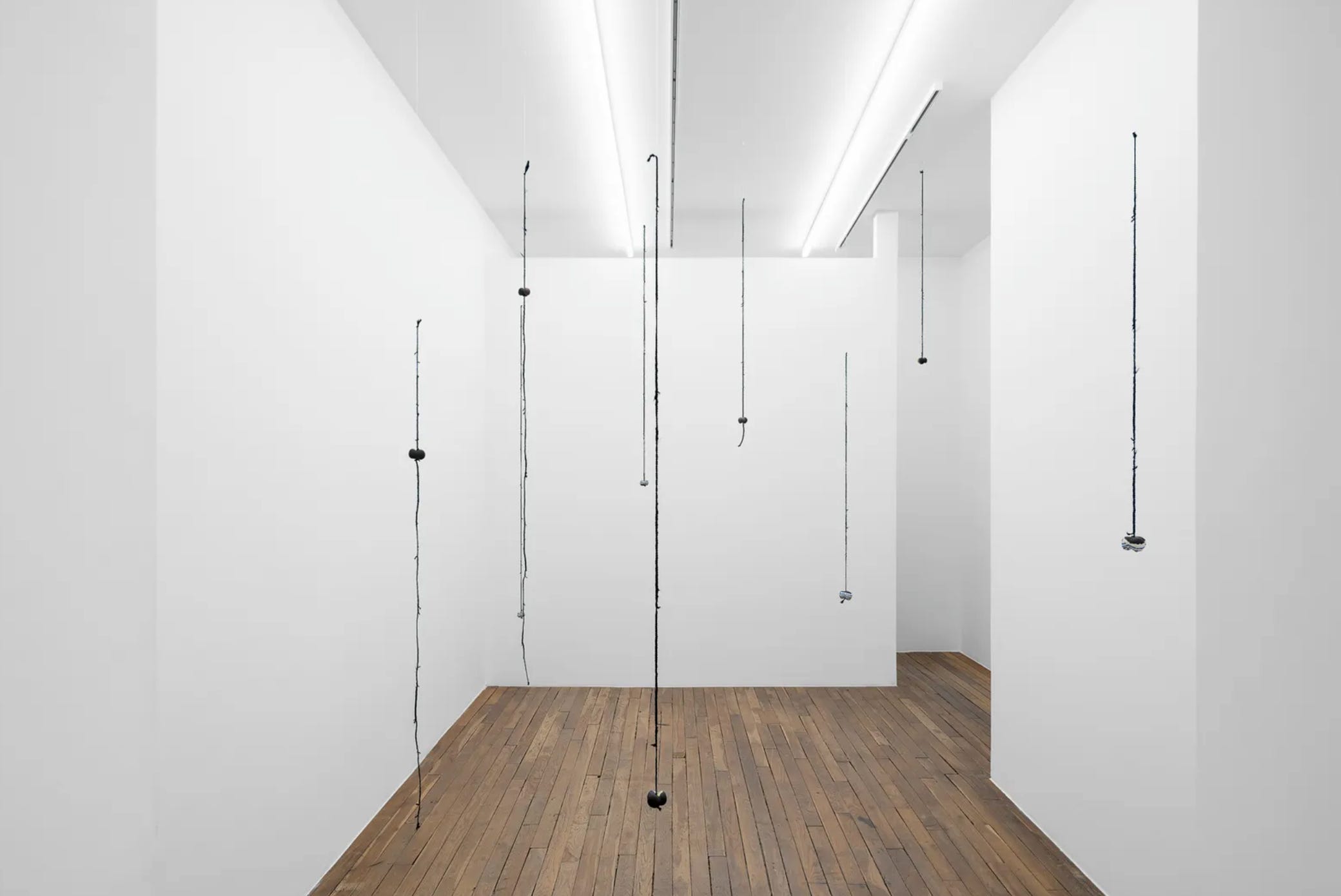
With the passing of years, the changes in politics, in nationhoods, and the different shapes taken by societies, the term “extractivism” expanded its semantics affecting stories, peoples, and cultures feeding up a system that takes and takes without reciprocal benefits to its places of origins.
A system built to take doesn't need one place to take from. It needs an elsewhere; and an elsewhere can be East, South , anywhere.
As Ishita Chakraborty says, the East Is Everywhere.
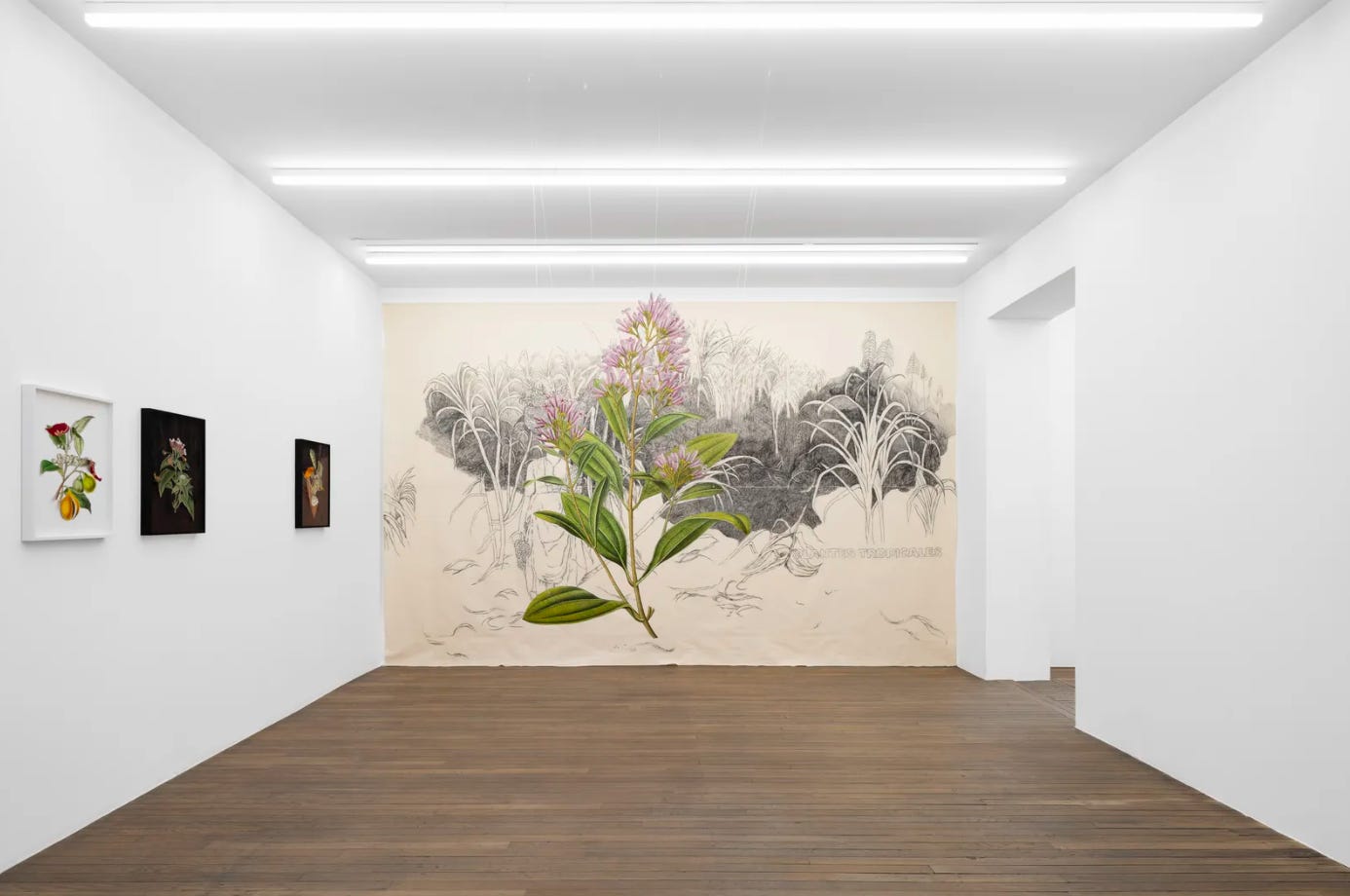
And by East, she means the plants, the food, and the clothes we wear; in cotton, fruits and rubber. In the notions of space, and memory, and language that circulate innocuously given for granted within “systems that emerge from them and continue to structure contemporary power relations”.
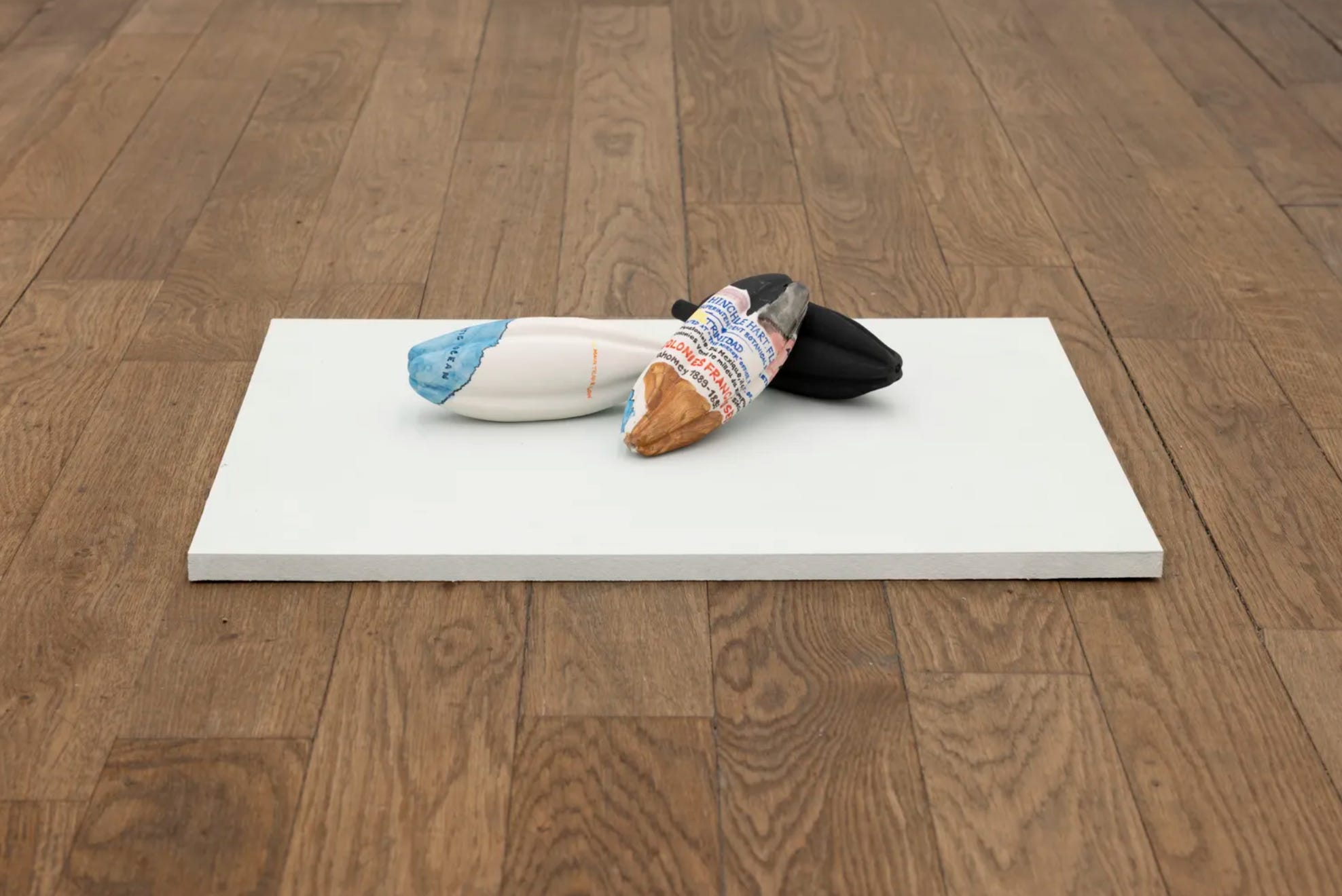
What the artist understands perfectly well, is the network of relations that the Global South and the Global North have created. But I believe that her job as an artist and researcher doesn’t rely merely on relating the people with the ecosystem. But bridge these relations already assembled together, in sublime ways. Objects corrupted with violence reformed with tenderness and poetry; “transforming instruments of constraint into a sign of resistance and vulnerability”.
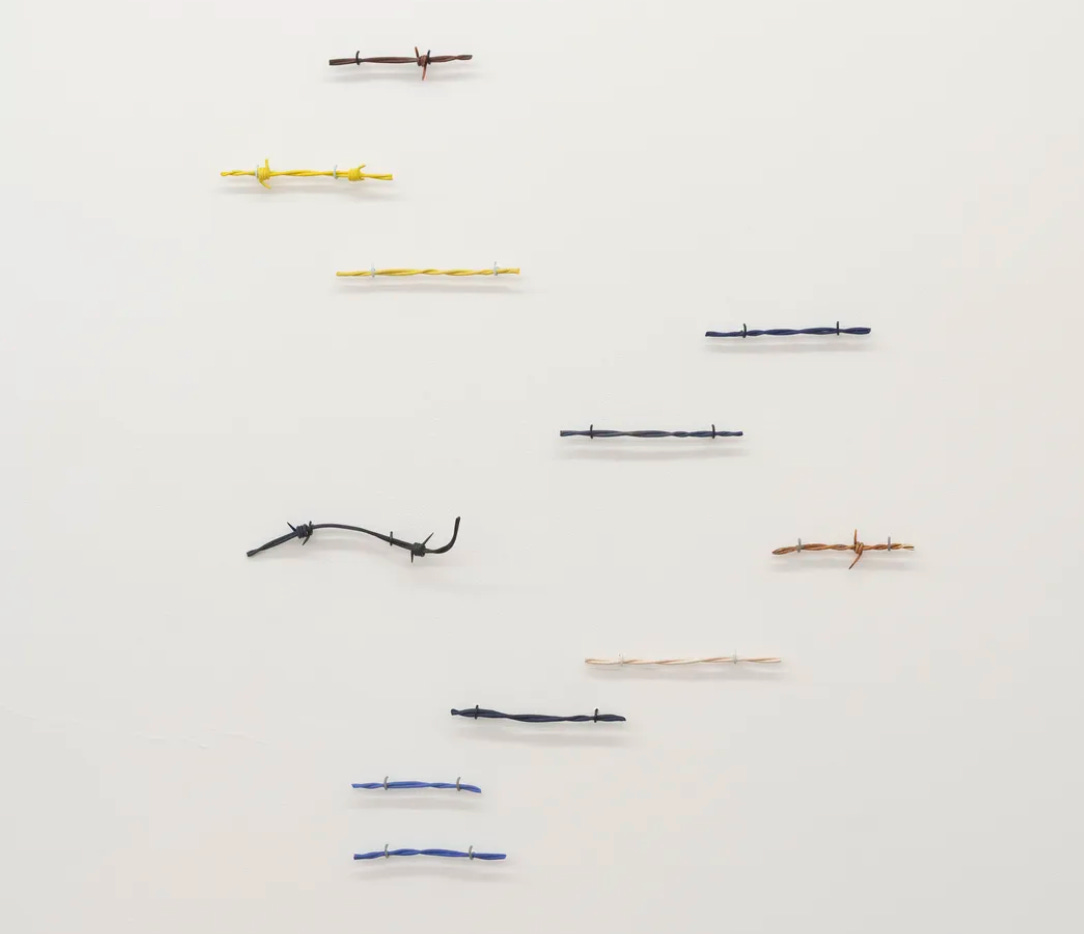
She distills memory through the poetics of material. In Plantes Tropicales, a mural drawing in charcoal and cotton, explanations are superfluous, the drawings anecdotal (plantation, sugar cane, slavery), because the very marrow of the message is spoken loudly by the material itself.
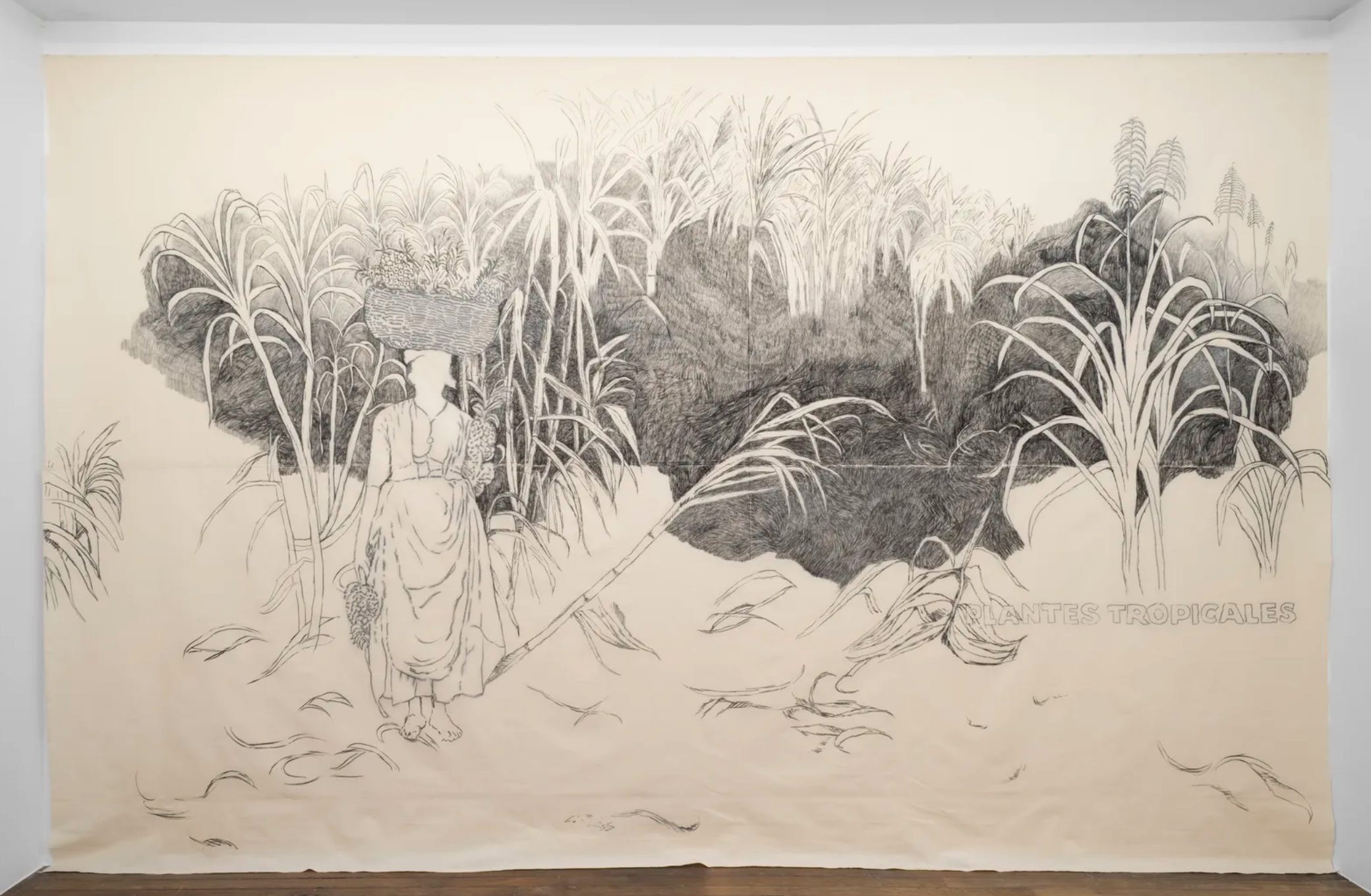
Ishita Chakraborty is far from making claims or denunciations of matters of histories: histories that belong so much to the South and East as they do to the West and North. In the end, there is one story told from discerning angles; from different distances of responsibility.
Chakraborty extracts the East from a geographical standpoint, towards an ideological force; she loosens the center free for it to stand on the apprehension of the beholder. Your center would depend on what lies beyond, because when you fix a center, everything else becomes “East.”
But when memory circulates framed by narratives of origin and understanding, the map is just a standpoint, and the East begins to move with you. The map only holds still if you refuse to move.


East Is Everywhere is on view at Galerie Peter Kilchmann, Paris, until July 25, 2026.